BRUDY PIO has been conceived to supplement daily requirements in essential fatty acids of the Omega-3 family and of the included group of vitamins and minerals, of carotenoids, such as lutein, zeaxanthin and lycopene, and of bilberry and olive leaf flavonoids
BRUDYPIO 1,5 g has been conceived to supplement daily requirements in essential fatty acids of the Omega-3 family and of the included group of vitamins and minerals, of carotenoids, such as lutein, zeaxanthin and lycopene, and of bilberry and olive leaf flavonoids, among other components. Brudy has developed and patented a source of docosahexaenoic acid (DHA): Tridocosahexanoína- AOX®. Docosahexaenoic acid (DHA) contributes to the maintenance of normal vision and to normal brain function. The beneficial effect is obtained with a daily intake of 250 mg of DHA. Vitamin A, riboflavin and zinc contribute to the maintenance of normal vision. Vitamins C and E, riboflavin and the minerals zinc, manganese, copper and selenium contribute to the protection of cells from oxidative stress. Thiamine, riboflavin, niacin and vitamins B6 and B12, vitamin C and copper contribute to the normal functioning of the nervous system.
Text revised: 01/05/2026. The update will take effect in the next shipment.
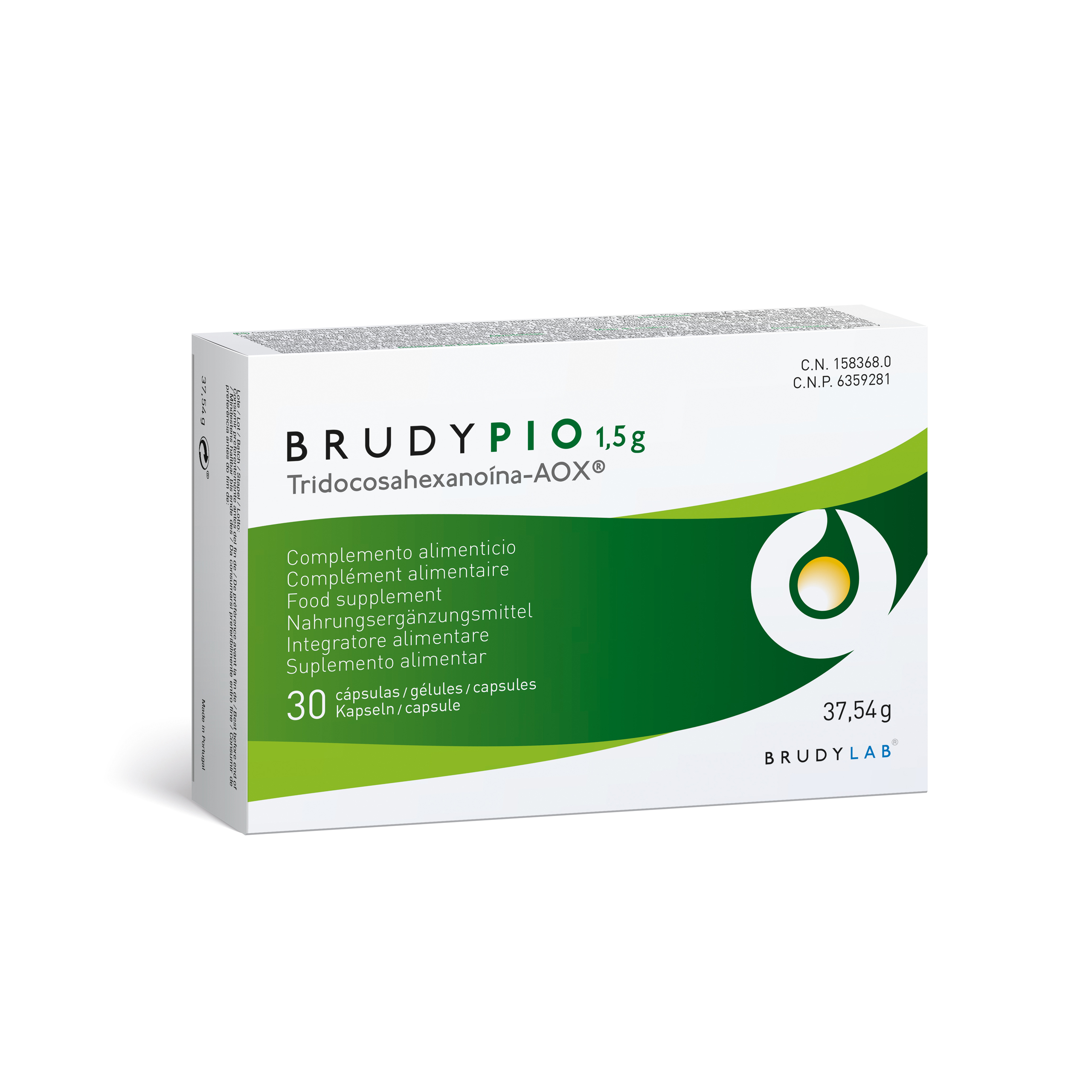
BRUDY PIO 1,5 g 30 soft gelatin capsules
CN 158368.0
CNP 6359281
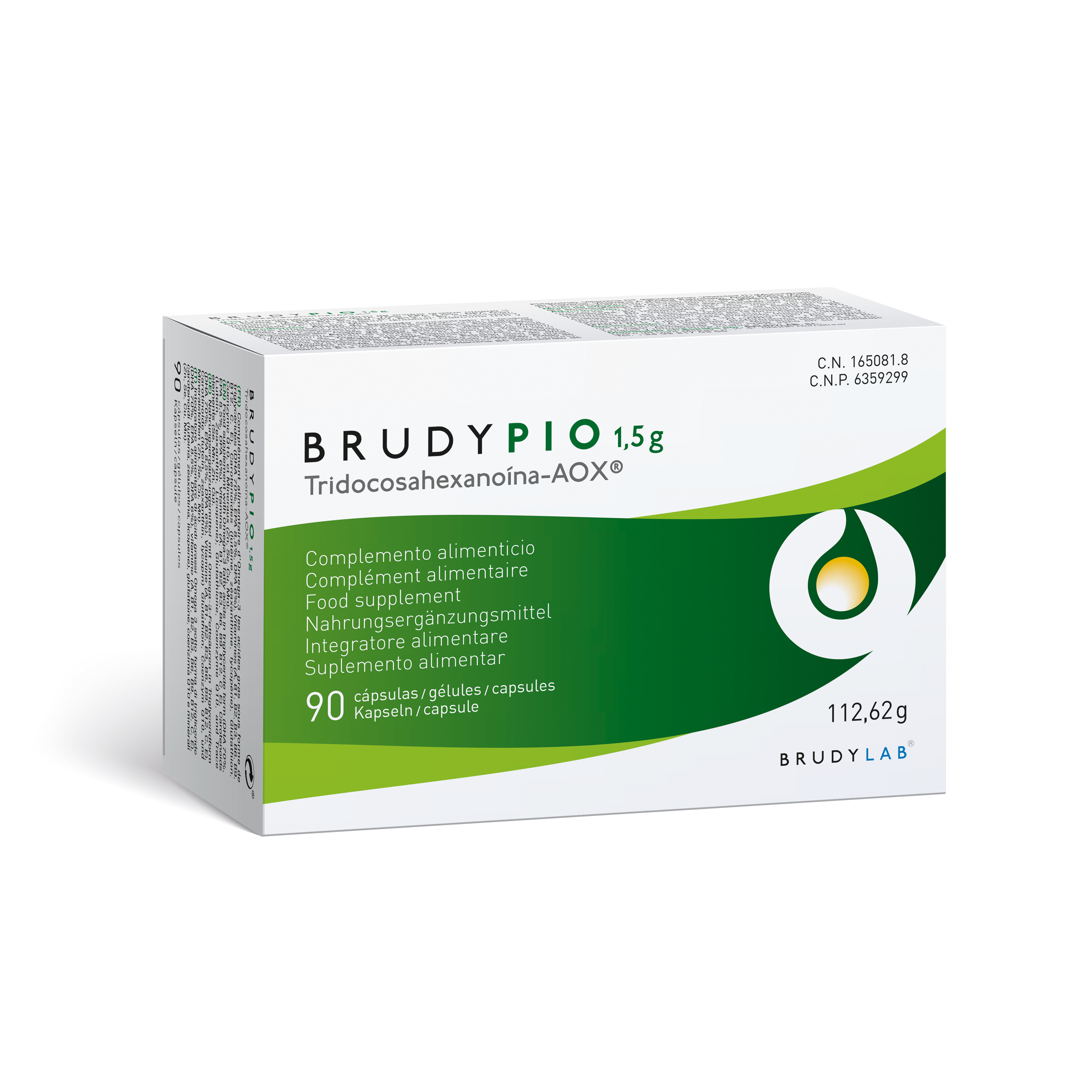
BRUDY PIO 1,5 g 90 soft gelatin capsules
CN 165081.8 / CNP 6359299
Winners Nutra Ingredients Awards for the Nutrition Research Project 2024
Nutrition Research Project: The Effect of Docosahexaenoix Acid Triglyceride (Tridocosahexanoína-AOX®) and Citicoline on the Visual Field of Patients with Glaucoma
WHAT THE JUDGES SAID:
The judges thought BrudyLabs research has delved into an interesting area that really stood out in terms of the ‘x-factor’, as this health area has not been investigated to a great extent. The study found that oral intakes of citicoline and docosahexaenoic acid significantly improved the visual field of patients with glaucoma, which was a very impressive outcome. The study also had a very strong methodology, using a randomised controlled trial with the inclusion of a strong sample.