
Title: Back to School and Children’s Vision
Published: - Updated:
Author: Redacción BRUDYLAB
Reviewer: Dra. Leia Garrote - Medical Director
Holding a book very close, losing one’s place while reading, or squinting to see the board does not confirm a vision problem, but it can warrant a conversation and, if the behavior persists, a professional assessment.
Back to School and Children’s Vision
Back to school and children’s vision: signs for reading and learning comfortably
Holding a book very close, losing one’s place while reading, or squinting at the board does not confirm a vision problem, but it can warrant a conversation and—if the behavior persists—a professional assessment. As kids head back to school, we review what to look for without causing alarm, the difference between a screening and a comprehensive exam, and how to balance reading, screen time, and outdoor activity.
Seeing well helps, but it does not explain on its own how a child learns.
Reading and writing are complex tasks. They involve language, attention, memory, teaching, emotional well-being, and learning opportunities, among many other factors. Vision is important, but a learning difficulty should not be automatically attributed to the eyes.
That said, blurred vision or sustained visual strain can hinder access to the board, paper, or a screen. The WHO notes that visual and auditory sensory inputs are important for optimal development and learning outcomes, and recommends integrating screening programs into systems that allow for the assessment and care of those in need [2].
Key idea: The perspective on vision is not about seeking a single explanation for academic performance, but rather about preventing a correctable difficulty from going unnoticed.
Why some vision problems go unnoticed
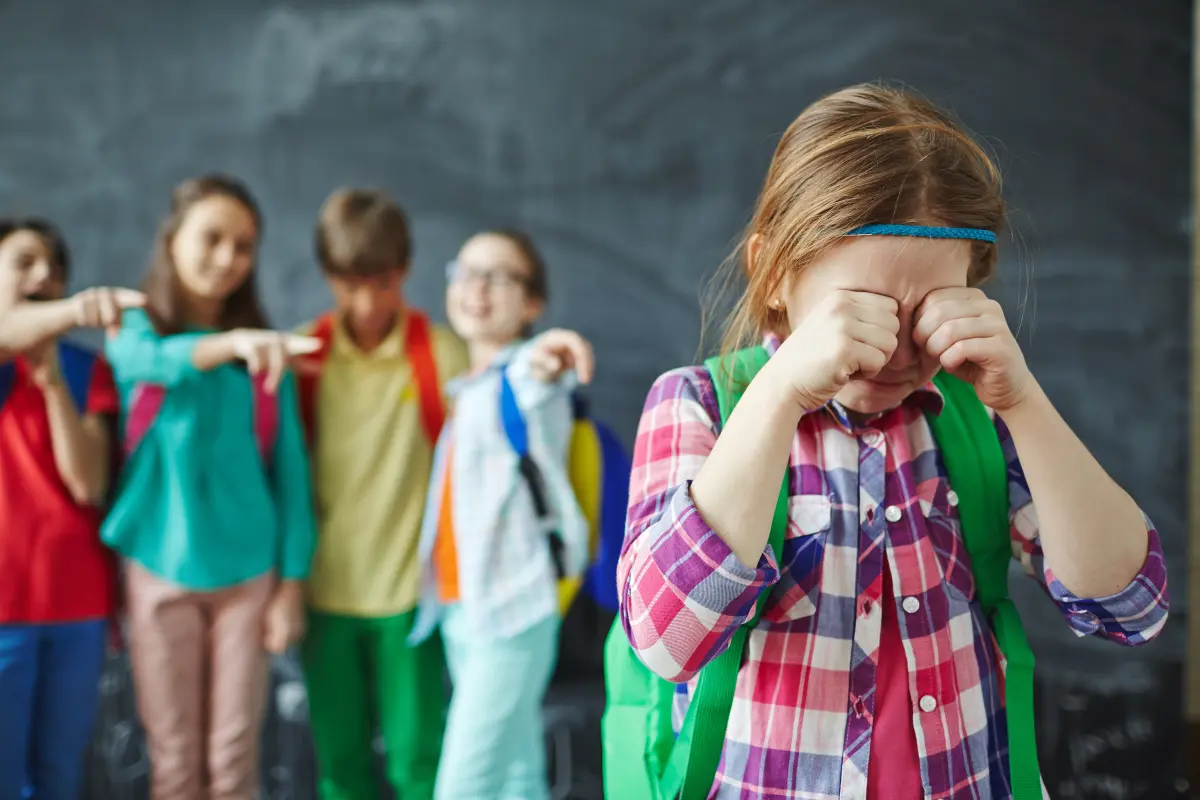
Children do not always mention that their vision is blurry. They may assume everyone sees the same way, adapt by moving closer to the text, or rely more on one eye than the other. For this reason, a recurring behavior can provide useful information, even though no single gesture is sufficient for a diagnosis.
Refractive errors occur when light is not focused correctly on the retina. Myopia typically impairs distance vision; hyperopia may require increased effort to focus, especially at close range; and astigmatism can cause distorted or blurred vision at various distances. The WHO considers uncorrected refractive errors the leading cause of visual impairment in both children and adults [3].
There are also other issues, such as strabismus—when the eyes do not align in the same direction—or amblyopia, a condition in which vision in one eye does not develop properly. These terms should not be used to label what is observed at home; they require professional examination.
Signs that may appear when looking at a distance or working up close
During the first few weeks of class, it can be helpful to pay attention to recurring changes. Signs described by health services and pediatric vision specialists include [5,8]:
- Squinting, turning the head, or closing one eye to look.
- Holding books, notebooks, or screens very close, or sitting very close to the television.
- Frequently losing one’s place while reading, or avoiding reading, writing, or drawing tasks.
- Repeatedly complaining of blurred vision, eye strain, or headaches associated with visual tasks.
- Frequently rubbing the eyes or showing noticeable fatigue after near-vision activities.
- New difficulties seeing the board, recognizing information from a distance, or coordinating during ball games.
- The eyes do not appear to point in the same direction consistently, or double vision occurs.
These signs are nonspecific. A headache can have many causes; losing one’s place while reading may be related to attention, language, or text layout; and rubbing one’s eyes can also stem from fatigue or irritation. What provides a clue is the pattern: when it occurs, during which task, how long it has been going on, and whether it affects daily activities.
Observing patterns without turning every gesture into a diagnosis.
A brief note can be more useful than a hasty conclusion. Over the course of several days, the family and the school can record what happens, the circumstances, and the frequency. For example, noting that the child “squints when copying from the board from the third row” provides more information than simply stating, “we think he or she is nearsighted.”
| What is observed | For what task or distance | Frequency and start | Impact on activity |
| Specific conduct or complaint | Blackboard, book, mobile phone, game… | Sometimes, daily, since when | If it interrupts, prevents, or delays the task |
This record is not a diagnostic test; it serves to better describe the situation during a consultation.
A vision screening and a comprehensive exam are not the same thing.
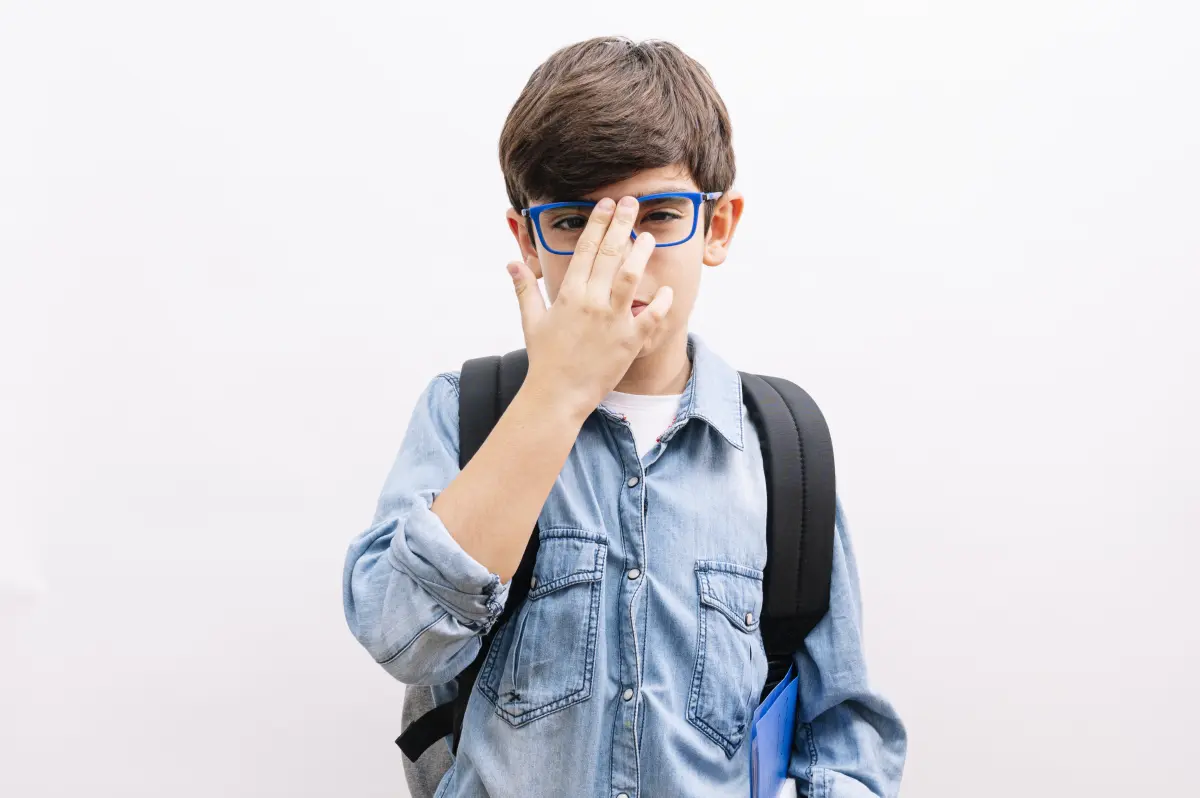
Vision screening aims to identify individuals who may require further assessment. It is useful at the school or community level, but it does not, on its own, confirm a diagnosis or rule out all problems. The WHO manual emphasizes that screening must be linked to referral pathways, refraction, and the provision of spectacles or other care as appropriate [4].
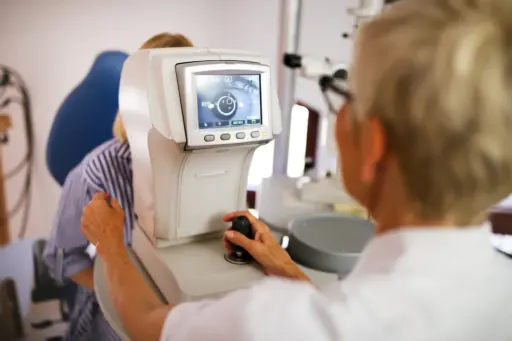
A comprehensive examination allows for the assessment of visual acuity in each eye, the refractive error, ocular alignment, and other aspects, depending on age and the reason for the visit. A child does not need to know how to read for their vision to be evaluated; there are adapted tests using symbols, images, and non-verbal responses [5].
If the school reports an out-of-range result or the family observes persistent signs, it is advisable to follow the recommended referral. Likewise, if a screening result was normal but symptoms or changes subsequently appear, consulting a professional is reasonable: a single test reflects only a specific moment in time.
Reading, screens, and pauses: a relationship that calls for nuance
Screens, books, and notebooks all share one thing: they require close-up work. Sustaining this activity for extended periods can be associated with temporary discomfort, such as eye strain or difficulty shifting focus. Taking breaks, varying your viewing distance, and looking into the distance regularly are sensible measures for maintaining comfort.
Research observes an association between increased daily screen time and a higher likelihood of myopia in children and adolescents, though much of the data is observational. A systematic review with meta-analysis published in 2025 found a dose-response relationship, although the authors also noted heterogeneity across device types, ages, and measurement methods [7]. An association does not imply that a specific screen is the sole cause.
That is why it is best to avoid “magic rules.” In practice, it helps to have text of a comfortable size, avoid intense glare, ensure the screen or book does not force you to get too close, and break up long sessions with changes in activity. If, despite these adjustments, discomfort persists, the answer is not simply to cut back on screen time; it is advisable to have your vision checked.
Time outdoors and what we really know about myopia
Spending time outdoors during the day is associated with a lower risk of developing myopia. A Cochrane review of randomized trials concluded that interventions to increase time spent outdoors can reduce its onset in the medium term, although the certainty of the evidence varied depending on the follow-up period, and the evidence regarding the progression of existing myopia was more uncertain [6].
This does not turn recess into a medical treatment, nor does it replace prescribed glasses or follow-up care. Nor is it necessary to expose the eyes directly to the sun; activities should be carried out with standard sun protection and safety measures. The practical recommendation is simpler: maintain regular opportunities for outdoor play and activity within the school and family routine.
A little coordination between family, school, and professionals
The return to school offers a good opportunity to ensure everyone is on the same page regarding information. If a child wears glasses or has specific needs, the school should be informed of the necessary details to facilitate their use without making the child feel self-conscious about the difference. If teachers notice the child moving closer to the board, struggling to copy notes, or avoiding visual tasks, a specific description of these behaviors can help guide a consultation with a specialist.
At home, open-ended questions are usually more useful than an interrogation: “Do you see just as well from anywhere in the classroom?”, “When do your eyes get tired?”, or “Is there anything you struggle to see now that you didn’t before?” It is best to listen to the answer and compare it with your own observations, without suggesting a diagnosis beforehand.
- Verify that the prescribed glasses are available and are being used according to professional instructions.
- Report specific and persistent changes, not just general impressions.
- Keep the reports and follow the review date indicated for that child.
- Do not share glasses, eye drops, or treatments with other people.
When it is advisable to seek an assessment and when to act quickly
It is advisable to seek an evaluation when signs recur, interfere with reading or class participation, the child reports blurred or double vision, an eye misalignment appears, or there is family concern. An evaluation is also particularly important if there is a family history of childhood eye problems [5].
Some changes should not wait for a routine check-up. Sudden vision loss, severe eye pain, trauma, an embedded object, or a sudden change in vision require urgent attention. A recurring white reflection in the pupil seen in photographs also warrants a prompt consultation, although a single photo showing this could be due to the angle or the flash [5,9].
Practical follow-up: this week, ask the child how they see the board and the texts, check for any recurring pattern, and share specific observations with the school or the professional. The goal is not to make a diagnosis at home, but to initiate the right conversation in a timely manner.
Frequently Asked Questions
How do I know if my child isn’t seeing the board clearly?
The person might squint, shift their posture, ask to move closer, or say that the letters look blurry. No single sign confirms a problem on its own; if the behavior recurs, it is worth evaluating [5].
Does holding the book very close mean having nearsightedness?
Not necessarily. It is a useful observation, but it can have several explanations. Myopia primarily affects distance vision and requires a vision test [3].
Does a school screening replace a comprehensive check-up?
No. Screening identifies potential difficulties and must be linked to a professional assessment when the result or symptoms indicate the need for one [4].
Can a child who doesn’t know how to read yet have their vision checked?
Yes. There are age-appropriate tests that use symbols, images, and other types of responses; reading skills are not required [5].
Do screens cause myopia?
Studies find an association between increased screen time and a higher likelihood of myopia, but they do not demonstrate that it is a sole cause, and results vary across studies [7].
Does the 20-20-20 rule work?
Looking into the distance and changing activities regularly can alleviate the strain of near-vision tasks, but there is no need to prescribe a rigid regimen as a guarantee of prevention.
Does spending time outdoors prevent myopia?
According to trials and reviews, it can reduce the likelihood of its onset, but it does not guarantee prevention nor replace the monitoring of already diagnosed myopia [6].
Does a headache always indicate a vision problem?
No. It has many possible causes. If it occurs repeatedly during visual tasks or is accompanied by blurred vision, it is advisable to discuss it with a professional [5].
What information helps during a consultation?
Describe what is observed, during which task or at what distance, since when, and with what frequency, as well as how it affects the activity. That information is more useful than proposing a diagnosis.
Literature
- UNESCO. International Literacy Day: Celebrations in 2026. UNESCO, 2026. https://www.unesco.org/en/days/literacy?hub=417
- World Health Organization. Vision and hearing screening for school-age children: implementation handbook. WHO, 2025. ISBN 978-92-4-010520-1. https://www.who.int/publications/i/item/9789240105201
- World Health Organization. Eye care, vision impairment and blindness: refractive errors. WHO, 2026. https://www.who.int/news-room/questions-and-answers/item/blindness-and-vision-impairment-refractive-errors
- World Health Organization. Vision and eye screening implementation handbook. WHO, 2024. ISBN 978-92-4-008245-8. https://www.who.int/publications/i/item/9789240082458
- National Health Service. Eye tests for children. NHS, revisión 2023. https://www.nhs.uk/tests-and-treatments/eye-tests-in-children/
- Kido A, Miyake M, Watanabe N. Interventions to increase time spent outdoors for preventing incidence and progression of myopia in children. Cochrane Database of Systematic Reviews, 2024;6:CD013549. DOI: 10.1002/14651858.CD013549.pub2. https://doi.org/10.1002/14651858.CD013549.pub2
- Ha A, Lee YJ, Lee M, Shim SR, Kim YK. Digital Screen Time and Myopia: A Systematic Review and Dose-Response Meta-Analysis. JAMA Network Open, 2025;8(2):e2460026. DOI: 10.1001/jamanetworkopen.2024.60026. https://doi.org/10.1001/jamanetworkopen.2024.60026
- American Association for Pediatric Ophthalmology and Strabismus. Refractive Errors in Children. AAPOS, 2026. https://www.aapos.org/glossary/refractive-errors-in-children
- National Health Service. Eye pain. NHS, revisión 2025. https://www.nhs.uk/symptoms/eye-pain/
Products related to Vuelta al cole y visión infantil
More entries at BrudyLab blog

Eye Health
Back to School and Children’s Vision

Maternal and Child
Breastfeeding and hydration

General
DHA and physical activity in summer: why the heat changes the rules
Artificial tears
Why is DHA so important for your eyes?
Eye Health
The critical importance of DHA in eye health
Eye Health
Glaucoma: Take care of your vision with nutrition and healthy habits

Maternal and Child
Benefits of breastfeeding

General