
Title: Comprehensive guide to interpreting cardiometabolic health measurements
Published: - Updated:
Author: Redacción BRUDYLAB
Reviewer: Dra. Leia Garrote - Medical Director
A blood pressure reading, a cholesterol value or a glucose result can provide important information, but none of them alone sums up cardiovascular health. How the measurement was taken, when it was taken, your medical history and your overall risk all affect how the result should be interpreted. This guide explains what each indicator represents, why it sometimes needs to be repeated and how to turn a result into a useful conversation with a healthcare professional.
Comprehensive guide to interpreting cardiometabolic health measurements
Blood pressure, cholesterol, and glucose: how to understand your numbers without jumping to conclusions.
A blood pressure reading, a cholesterol value or a glucose result can provide important information, but none of them alone sums up cardiovascular health. How the measurement was taken, when it was taken, your medical history and your overall risk all affect how the result should be interpreted. This guide explains what each indicator represents, why it sometimes needs to be repeated and how to turn a result into a useful conversation with a healthcare professional.
Three different measurements and one overall assessment
Blood pressure, cholesterol and glucose are not three different ways of measuring the same thing. Each provides information about a different part of the cardiometabolic system. Blood pressure describes the force with which blood pushes against the walls of the arteries; the lipid profile provides information about different particles and fats circulating in the blood; and glucose reflects the amount of sugar available at a particular moment or, through glycated haemoglobin, over a longer period.
The European Know Your Numbers campaign brings these three measurements together because all three can contribute to estimating cardiovascular and metabolic risk [1]. This combination is useful, but it requires an important clarification: knowing a number does not mean that it should be interpreted on your own. Age, smoking, family history, kidney function, other diagnoses and treatments can all alter the practical significance of a result.
For this reason, a health review should not end with a value highlighted in red or green. Its purpose is to place the data in context, decide whether any result needs to be confirmed and agree on appropriate follow-up.
Blood pressure is a snapshot that is sensitive to context
Blood pressure is expressed as two numbers. Systolic pressure is the upper number and corresponds to the moment when the heart contracts. Diastolic pressure is the lower number and reflects the pressure between heartbeats.
Both can vary throughout the day and may be affected by recent exercise, caffeine, smoking, pain, stress, a full bladder or an incorrect measurement technique.
European guidelines recommend a standardised technique: sit down and rest for around five minutes, keep your back supported, your feet on the floor and your legs uncrossed, place the cuff on your bare upper arm and support the arm at heart level. They also recommend avoiding exercise, caffeine and smoking during the 30 minutes before the measurement [2]. A cuff that does not match the circumference of the arm or a device that has not been validated may distort the result.
A high screening measurement usually needs to be repeated. European Society of Cardiology guidelines favour confirmation outside the clinic, using home blood pressure monitoring or ambulatory blood pressure monitoring whenever possible [2]. This can help identify the white-coat effect, when blood pressure rises in the clinic, and masked hypertension, when the opposite occurs.
At home, the general recommendation in the guideline is to take two readings one or two minutes apart, in the morning and evening, for at least three days and up to seven days, and to use the average [2]. A healthcare professional may adapt this schedule. Medication should not be changed and conclusions should not be drawn on the basis of a single reading.
If a reading is very high and is accompanied by chest pain, shortness of breath, sudden weakness, speech disturbances or other severe symptoms, urgent medical assessment is required.
Cholesterol is interpreted as a profile and according to overall risk
Talking about cholesterol as though it were a single number is an oversimplification. A blood test may include total cholesterol, LDL cholesterol, HDL cholesterol and triglycerides.
LDL carries cholesterol towards the tissues and is a central variable in cardiovascular prevention; HDL is involved in reverse cholesterol transport, but a high HDL value does not in itself cancel out other risk factors. Triglycerides are another type of fat and are influenced, among other factors, by recent food intake, alcohol, body weight, physical activity and certain health conditions.
The European update on dyslipidaemias maintains an important principle: LDL targets depend on each person’s individual risk category [3]. There is no single ideal number that applies equally to a young adult without other risk factors and to someone with cardiovascular disease, diabetes, kidney disease or a high calculated risk.
Total cholesterol can therefore provide an initial indication, but it is not sufficient for decision-making. Healthcare professionals assess the complete lipid profile, medical history and, where appropriate, risk-estimation tools such as SCORE2 or SCORE2-OP. In selected situations, they may also consider risk modifiers such as family history or lipoprotein(a) [3].
Responsible interpretation avoids two shortcuts: assuming that a result within the laboratory reference range guarantees low risk, or assuming that an out-of-range result always requires the same intervention. A laboratory reference interval and an individual’s clinical target are not equivalent concepts.
Fasting glucose and HbA1c look at different periods
Fasting glucose indicates the concentration of glucose in the blood at that moment, after the fasting period specified by the laboratory. It can be affected by acute illness, stress, sleep, certain medicines and preparation for the test.
Glycated haemoglobin, or HbA1c, estimates average glucose exposure over approximately the previous two to three months [4]. It does not require fasting, although certain conditions that affect red blood cells or haemoglobin may make the result less reliable.
Glycated hemoglobin acts as your body’s “memory.” It measures your average blood sugar level over the past three months. Because it is not affected by isolated daily fluctuations, it provides your doctor with a clear, steady, and constructive picture of your cardiometabolic health.

Both tests can be used for screening, but they do not always identify exactly the same people [4]. In the absence of clear symptoms or an unequivocal clinical situation, a result within the diagnostic range generally needs to be confirmed with a second determination, according to professional judgement [4]. This is another reason not to turn a single number into a label.
It is also important to distinguish a home glucose meter from a diagnostic test. Self-monitoring devices are useful in specific situations recommended by healthcare professionals, but diagnosis is based on laboratory tests and clinical criteria. Continuous glucose monitoring is also not recommended as a general tool for diagnosing prediabetes or diabetes [4].
From an isolated result to total cardiovascular risk
Cardiovascular risk is the probability of developing certain cardiovascular problems over a defined period of time. It cannot be determined by simply adding three independent warning signals.
Clinical models combine age, sex, smoking status, blood pressure and lipids, and then integrate other information when relevant. Current European guidelines use SCORE2 and SCORE2-OP in certain adults without known cardiovascular disease or diabetes, with adjustments according to the country’s level of risk [3].
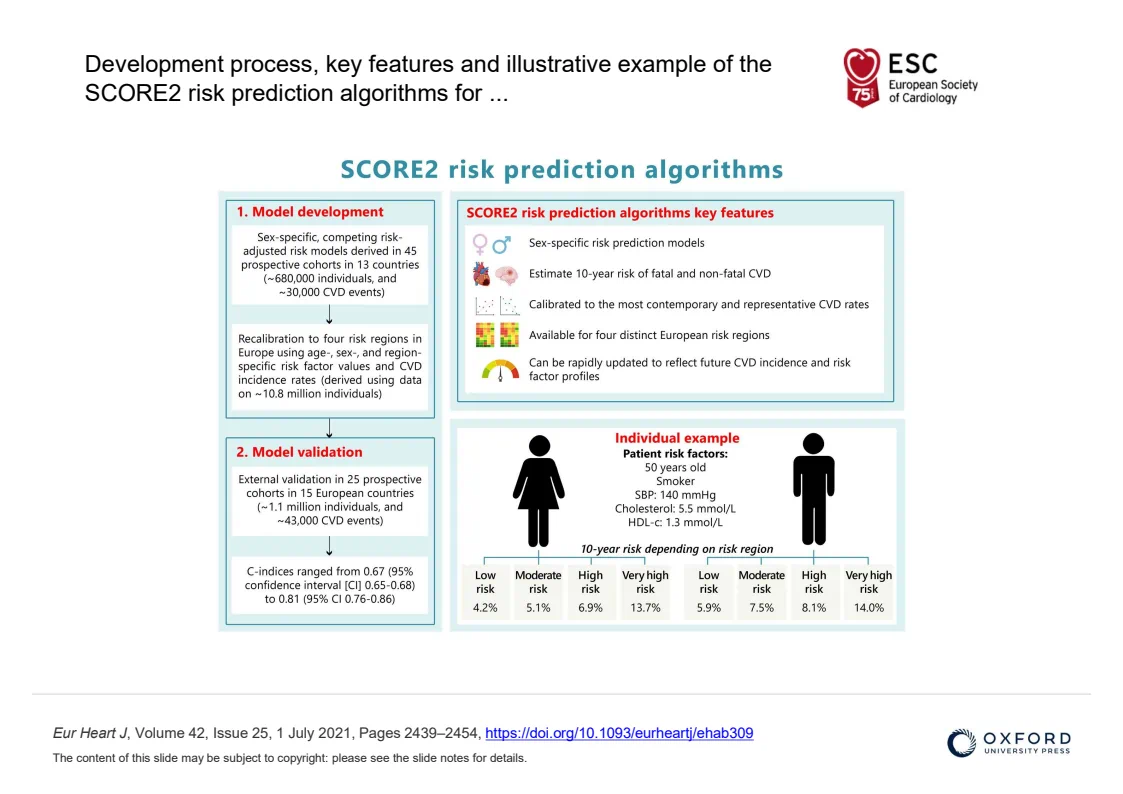
This overall approach explains why two people with the same LDL level or the same blood pressure may receive different recommendations. It also prevents an apparently favourable number from masking other risk factors. Correct interpretation is not about assigning blame; it is about gathering enough information to choose the most appropriate next step.
Family history deserves explicit consideration. A heart attack or stroke at an early age in a first-degree relative, or a known history of very high cholesterol in the family, may alter the assessment. Bringing this information to an appointment can be just as useful as bringing the blood test results.
How to prepare for a review to obtain more useful data
Good interpretation begins before the measurement. The following steps can reduce errors and help make the discussion clearer:
- Check whether your blood test requires fasting and for how many hours. Do not extend the fasting period on your own.
- Make a note of the medicines and supplements you take, including doses and timing. Do not stop taking them for the test unless specifically instructed to do so.
- If you measure your blood pressure at home, use a validated upper-arm device, check that the cuff is the correct size and bring your complete record, not just the highest reading.
- Record the time and any unusual circumstances, such as fever, pain, a poor night’s sleep or recent exercise.
- Gather relevant family history and previous results. Changes over time often provide more information than an isolated snapshot.
For the lipid profile, the healthcare professional or laboratory will indicate whether fasting is required. Many tests can be performed without fasting, but triglycerides and certain clinical situations may justify specific instructions. Following the centre’s instructions helps avoid unnecessary repeat testing.
What to ask when you receive your results
A report becomes more useful when it is turned into specific questions. Rather than focusing only on whether a result is “normal” or “high”, it may be useful to ask:
- Is this an isolated result or does it confirm a trend compared with previous measurements?
- Could the measurement technique, fasting or a temporary circumstance have influenced the result?
- Which part of the lipid profile is most relevant in my case?
- What is my overall cardiovascular risk and which factors determine it?
- Does the test need to be repeated, should I measure it at home or is another test needed?
- Which change should be prioritised and how will we assess whether it is working?
These questions do not replace a clinical assessment. They help you understand it and take part in shared decision-making.
Habits that matter beyond a single number
These measurements do not exist separately from lifestyle habits. A diet based on vegetables, fruit, pulses, whole grains, nuts and appropriate protein sources; suitable physical activity; avoiding tobacco; limiting or avoiding alcohol; and getting adequate rest all form part of cardiovascular prevention.
The specific priority depends on each person’s circumstances and does not replace treatment when treatment is indicated.
Omega-3 fatty acids, especially DHA and EPA, also deserve attention. Oily fish such as sardines, mackerel, salmon and anchovies are among their main dietary sources. Including them as part of a varied diet is a practical way of increasing intake of these fatty acids.
The European Union states that EPA and DHA contribute to the normal function of the heart. The beneficial effect is obtained with a daily intake of 250 mg of EPA and DHA. This claim refers to maintaining normal function [5].
When oily fish is not consumed or the diet does not provide sufficient amounts, a food supplement may be an option to complement intake. It is advisable to check how much DHA and EPA the daily dose actually provides and to consult a healthcare professional in the presence of medical conditions, pregnancy or regular treatments.
There is also no need to pursue extreme changes following a blood test. A realistic plan defines one or two actions, a time frame and a way of reviewing the outcome. If there is a diagnosis, pregnancy, kidney disease, pharmacological treatment or a physical limitation, changes should be individualised together with the healthcare team.
A proportionate next step without unnecessary alarm
Knowing your blood pressure, lipid profile and glucose can open the door to a valuable conversation. The practical next step is to measure correctly, retain the context and review the overall picture with a healthcare professional.
If a result is unexpected, confirming it may be just as important as the initial number. If it is favourable, it is useful to understand which factors are helping to maintain it and when the measurement should be repeated.
The goal is not to collect perfect numbers. It is to have reliable information that allows proportionate decisions to be made without unnecessary alarm or false reassurance.
Frequently Asked Questions
- Which three measurements are useful to know during a cardiovascular check-up?
Blood pressure, the lipid profile and glucose are commonly assessed indicators, but they do not represent the whole of cardiovascular risk. They should be evaluated together with age, smoking, medical and family history, kidney function, other diagnoses and treatments. - Does one high blood pressure reading mean that I have hypertension?
Not necessarily. Blood pressure varies, and an elevated screening measurement generally needs to be repeated or confirmed outside the clinic. Measurement technique and the circumstances at the time matter [2]. - How can I measure my blood pressure more reliably at home?
Rest for five minutes, sit with your back supported and your feet on the floor, use an appropriately sized cuff on your bare upper arm and support your arm at heart level. Follow the number of measurements recommended by your healthcare professional [2]. - Is total cholesterol enough to know whether my risk is high?
No. Healthcare professionals interpret LDL, HDL, triglycerides and other factors. LDL targets depend on overall risk rather than on a single universal threshold [3] - What is the difference between LDL and HDL cholesterol?
They are particles that transport cholesterol in different ways. LDL is a central target in cardiovascular prevention; a high HDL value does not automatically compensate for an elevated LDL level or for other risk factors. - Do I need to fast before cholesterol and glucose blood tests?
It depends on the tests requested and the laboratory protocol. Check the instructions before attending and do not extend fasting on your own. - What is the difference between fasting glucose and HbA1c?
Fasting glucose is a measurement at a specific moment. HbA1c estimates average glucose exposure over approximately two to three months, although it may be affected in certain situations [4]. - Does a high glucose result by itself confirm diabetes?
In the absence of clear symptoms or an unequivocal clinical situation, diagnosis generally requires confirmation with another measurement and professional assessment [4]. - How often should these measurements be checked?
There is no single recommended frequency. It depends on age, previous results, medical and family history, pregnancy, medication and overall risk. A healthcare professional can determine an appropriate interval. - What should I bring to an appointment to review my results?
Bring the complete report, previous results, home monitoring records if you have them, a list of medicines and supplements, and relevant family history. It is also useful to write down your questions.
Literature
- Comisión Europea, Dirección General de Salud y Seguridad Alimentaria. Know Your Numbers y EU Screening Week. Public Health, 2026. https://health.ec.europa.eu/know-your-numbers_en
- McEvoy JW, McCarthy CP, Bruno RM y cols.. 2024 ESC Guidelines for the management of elevated blood pressure and hypertension. European Heart Journal 45 38 3912 4018, 2024. DOI: 10.1093/eurheartj/ehae178. https://academic.oup.com/eurheartj/article/45/38/3912/7741010
- Mach F, Koskinas KC, Roeters van Lennep JE y cols.. 2025 Focused Update of the 2019 ESC EAS Guidelines for the management of dyslipidaemias. European Society of Cardiology y European Atherosclerosis Society, 2025. https://www.escardio.org/guidelines/clinical-practice-guidelines/all-esc-practice-guidelines/dyslipidaemias/
- American Diabetes Association Professional Practice Committee. Diagnosis and Classification of Diabetes Standards of Care in Diabetes 2026. Diabetes Care 49 Supplement 1 S27 S49, 2026. DOI: 10.2337/dc26-S002. https://diabetesjournals.org/care/article/49/Supplement_1/S27/163926/2-Diagnosis-and-Classification-of-Diabetes
- Comisión Europea. Reglamento (UE) n.º 432/2012 por el que se establece una lista de declaraciones autorizadas de propiedades saludables de los alimentos (texto consolidado a 20 de agosto de 2025). Diario Oficial de la Unión Europea y EUR-Lex, 2025. https://eur-lex.europa.eu/legal-content/ES/TXT/?uri=CELEX:02012R0432-20250820
Products related to salud cardiometabólica

More entries at BrudyLab blog

General
Comprehensive guide to interpreting cardiometabolic health measurements

Eye Health
Back to School and Children’s Vision

Maternal and Child
Breastfeeding and hydration

General
DHA and physical activity in summer: why the heat changes the rules

Artificial tears
Why is DHA so important for your eyes?
Eye Health
The critical importance of DHA in eye health
Eye Health
Glaucoma: Take care of your vision with nutrition and healthy habits

Maternal and Child
Benefits of breastfeeding

General